
DistroKid Alternatives for Record Labels

Table of Contents
- Why Record Labels Need Different Distribution Tools
- Key Features to Evaluate in DistroKid Alternatives for Record Labels
- Music Distribution Royalty Splits: What Labels Should Expect
- Top DistroKid Alternatives for Record Labels: Feature Comparison
- White Label Music Distribution for Growing Labels
- How to Start a Record Label Distribution Strategy
- Migration and Data Protection: Exit Strategy Considerations
- Conclusion
Last Updated: August 9, 2026
Why Record Labels Need Different Distribution Tools
The music distribution landscape has fractured. A platform built for solo artists uploading their first single operates under completely different constraints than a label managing fifty artists, multiple sublabels, and revenue splits across collaborators. DistroKid alternatives for record labels exist precisely because the generic approach doesn't scale.
When running a label, you're managing infrastructure: bulk uploads, automated royalty splits, detailed reporting by artist and platform, and separate financial accounts for different sublabels.
Labels require tools that understand splits, sublabel hierarchies, and batch processing. They need monthly payouts, not quarterly ones. They need to see exactly where revenue comes from, which platform, which artist, which release, down to the cent. Most importantly, they need transparency. A label's reputation depends on accurate reporting and reliable payments to artists.
At NexaTunes, we've built specifically for this use case. Labels scaling their operations need distribution partners that treat them as professional businesses, not hobbyists. That means unlimited sublabels, detailed label-level reporting, and direct access to platforms like Beatport and Traxsource where electronic music actually gets discovered.
Key Features to Evaluate in DistroKid Alternatives for Record Labels
Choosing a distribution platform for your label requires evaluating specific operational capabilities, not just general features.
Royalty Splits and Multi-Artist Management
Your platform needs to handle automatic splits between you, your artists, and collaborators. When an artist releases a track with a featured producer who gets a percentage, the system should calculate and distribute those shares without manual intervention. Look for platforms supporting unlimited artists under a single label account without per-artist fees.
Sublabel Architecture
A professional label often operates multiple sublabels, one for house music, another for techno, a third for experimental releases. Your distribution platform should let you create separate sublabel accounts with independent branding, artist rosters, and financial reporting. This is essential for maintaining distinct brand identities and managing complex organizational structures.
Reporting and Financial Transparency
You need to see exactly where money comes from. A solid label-focused platform breaks down revenue by platform (Spotify, Apple Music, Beatport, etc.), by artist, by release, and by time period. Monthly payouts matter more than quarterly ones. A platform that pays monthly keeps your accounting clean and your artists happy.
Speed to Market
Distribution latency affects your competitive position. Electronic music especially moves fast. A release that takes two weeks to hit Beatport might miss its moment. Look for platforms promising delivery within days, not weeks.
Platform Access
Not all distributors have equal relationships with all platforms. If you're releasing electronic music, direct access to Beatport and Traxsource matters enormously. A distributor that treats them as afterthoughts is limiting your reach.
Customer Support
When something goes wrong, you need support that understands label operations and responds quickly. Email support with 48-hour response times doesn't cut it when artists are waiting for their money.
Music Distribution Royalty Splits: What Labels Should Expect
Most digital streaming platforms pay between $0.003 and $0.005 per stream. A platform's job is to collect those payments from DSPs and pass them through to you, minus their commission. Commission structures vary significantly: some charge flat annual fees, others take 15-30% of revenue, and some use hybrid models.
Your distributor should clearly explain their take-rate before you commit. Some platforms hide additional fees in fine print: charges for extra artist slots, UGC monetization splits, or post-cancellation commissions. These add up quickly when managing multiple artists.
Royalty splits between label and artist should flow automatically. When an artist earns $1,000 and you've agreed to take 20%, the system should calculate $200 for you and $800 for the artist, then pay out accordingly. Manual splits are error-prone and kill your credibility with artists.
Watch for platforms that withhold payments until reaching a minimum threshold. For a label with multiple revenue streams, you want access to funds as they accumulate. Also pay attention to how platforms handle chargebacks and disputed payments. If a DSP reverses a payment months later, does your distributor eat the loss or pass it back to you?
Top DistroKid Alternatives for Record Labels: Feature Comparison

| Platform | Starting Price | Best For | Key Label Feature |
|---|---|---|---|
| NexaTunes | Contact for pricing | Professional labels | Unlimited sublabels, monthly payouts, detailed label-level reporting |
| Symphonic Distribution | $29.99/year | Established labels with marketing needs | SplitShare automatic royalty splits, partner manager support |
| TuneCore | $24.99/year | Labels with consistent releases | Custom label names, integrated publishing admin, daily trend reports |
| FUGA | Enterprise pricing | Large catalogs and distributors | API-driven infrastructure, modular services, rights management |
| The Orchard | 15-30% commission | Premium labels seeking full services | Comprehensive marketing, sync licensing, major label backing |
NexaTunes
NexaTunes is built from the ground up for professional labels. The platform prioritizes what matters to label operators: unlimited sublabels without per-artist fees, monthly royalty payouts, and detailed reporting that breaks down earnings by platform and artist.
The core advantage is transparency. You get label-level visibility into exactly where your revenue comes from. If running multiple sublabels, each has its own dashboard and financial reporting. Monthly payouts keep your cash flow predictable, crucial when paying artists monthly.
Direct access to Beatport and Traxsource is a significant differentiator for electronic music labels. The platform supports unlimited artists and collaborators under a single label account without per-artist fees. As your label grows, your infrastructure scales without unexpected cost increases.
Pros:
- Unlimited sublabels and artists without per-unit fees
- Monthly royalty payouts for better cash flow
- Detailed label-level reporting with platform and artist breakdowns
- Direct access to Beatport and Traxsource
- Transparent pricing without hidden fees
Cons:
- Requires direct contact for pricing information
- Newer platform with smaller artist base than legacy distributors
Symphonic Distribution
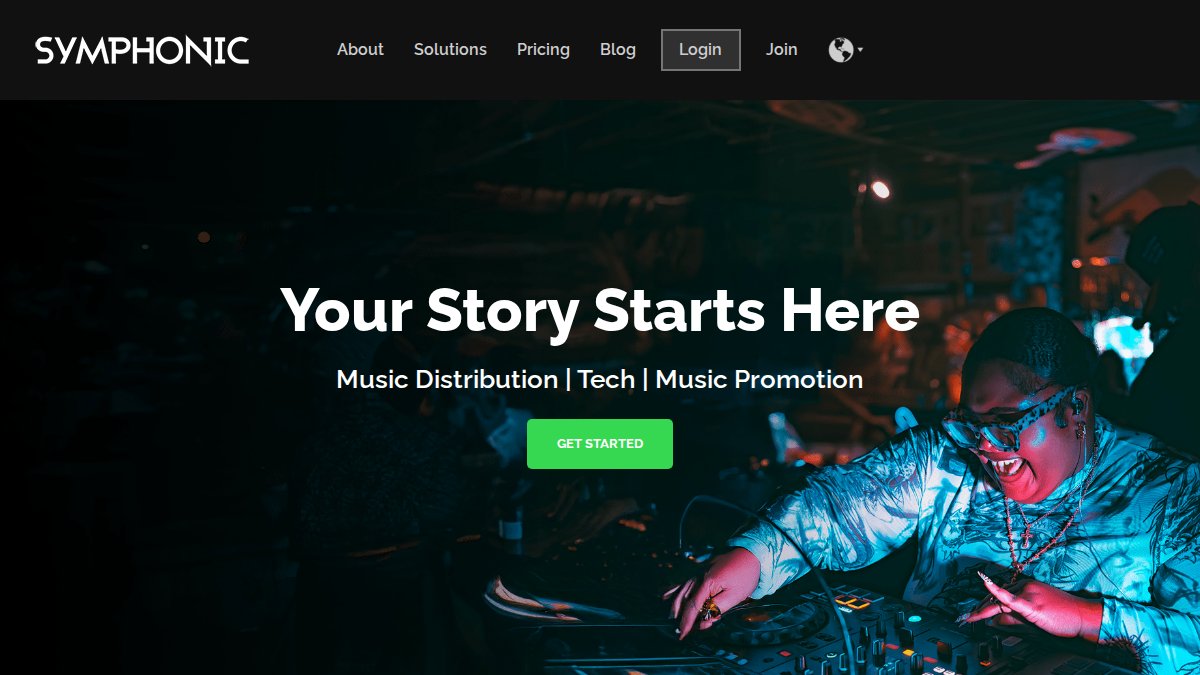
Symphonic Distribution combines broad platform reach with a focus on royalty accuracy. The SplitShare feature handles automatic payments to collaborators, essential when managing releases with multiple contributors.
The platform delivers to 200+ stores globally. The analytics dashboard includes data from Spotify, Apple Music, Pandora, and TikTok. Symphonic's Partner tier includes dedicated client managers and marketing support, though it requires application and approval.
Pros:
- Strong royalty split automation with SplitShare
- Dedicated managers for Partner-tier clients
- Fast Spotify delivery and seamless collaboration tracking
- Comprehensive analytics across major platforms
Cons:
- 30% UGC share on Starter plan can be expensive
- Partner plan requires application and approval
- Less specialized for electronic music platforms
TuneCore
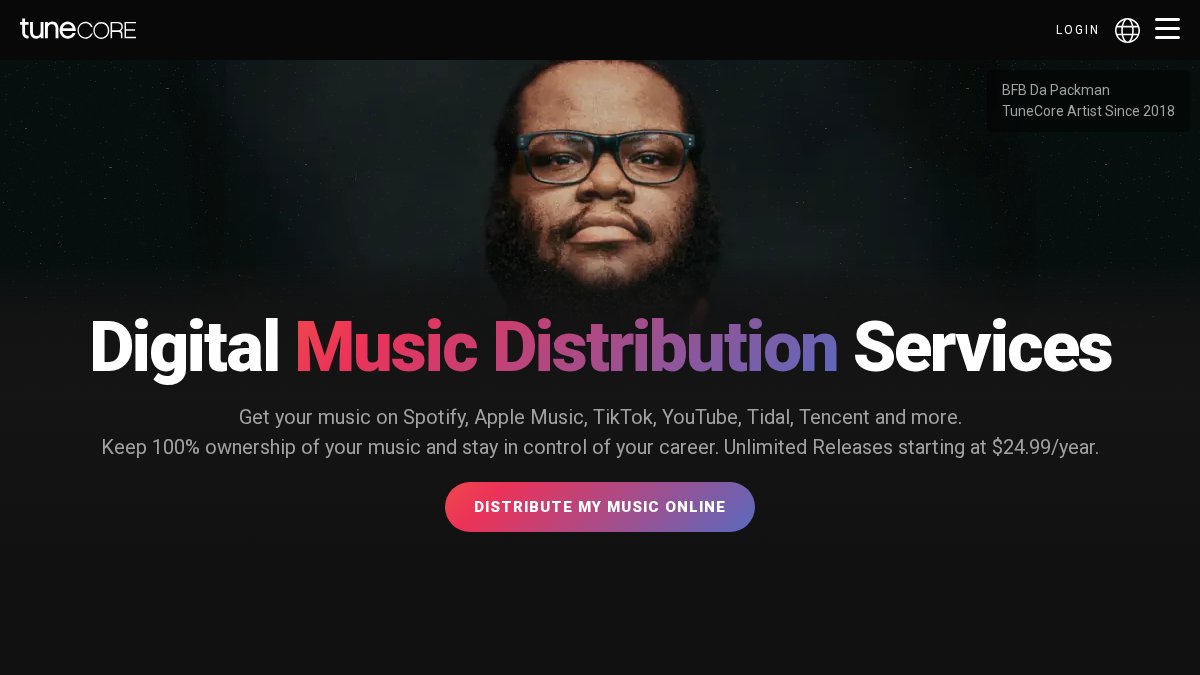
TuneCore offers a polished interface and integrated publishing administration, saving money if you're managing both master rights and publishing. The Professional plan allows custom label names and UPC codes, essential for maintaining professional branding.
The platform delivers to 150+ stores with unlimited releases. Daily trend reports give real-time visibility into how your releases perform. The dashboard is intuitive and less intimidating for non-technical teams.
Pros:
- Intuitive dashboard and polished interface
- Integrated publishing administration available
- Custom label names on Professional plan
- Unlimited releases and daily trend reports
Cons:
- 20% commission on social monetization on some plans
- Additional fees for extra artists on Professional plan
- Less specialized for sublabel management
FUGA
FUGA is an enterprise-grade platform designed for distributors and large labels managing extensive catalogs. The platform is API-driven, allowing you to automate workflows that would be manual on consumer-facing platforms. Bulk uploads, metadata management, and reporting integration all work programmatically.
FUGA handles rights management and royalty accounting at the enterprise level. The modular service structure means you can add services like marketing, sync licensing, or content management as you grow. Custom pricing requires negotiation with the sales team.
Pros:
- Enterprise-grade infrastructure and API access
- Modular services tailored to your specific needs
- Comprehensive rights management and accounting
- Scalable for managing large catalogs
Cons:
- Pricing requires negotiation with sales team
- Overkill for smaller labels
- Less suitable for independent artists or very small labels
The Orchard
The Orchard is a subsidiary of Sony Music Entertainment, giving it credibility and resources independent distributors can't match. The platform offers comprehensive services beyond distribution: marketing campaigns, sync licensing for TV/film/advertising, and strategic business guidance.
If you're a label with ambitions to scale significantly, The Orchard's connections matter. They have relationships with major platforms and can facilitate opportunities other distributors can't access. The commission-based pricing (15-30% of revenue) is higher than flat-fee alternatives, but you're paying for a full-service partner. The application process is selective.
Pros:
- Major label backing and extensive industry connections
- Comprehensive services including sync licensing and marketing
- Access to opportunities unavailable through independent distributors
- Transparent royalty accounting and detailed analytics
Cons:
- Application-based, not open to all labels
- Commission-based pricing (15-30%) can be expensive at scale
- Less suitable for smaller or newer labels
White Label Music Distribution for Growing Labels
White label music distribution lets you offer distribution services under your own brand while outsourcing backend infrastructure. You partner with a distributor that provides API access, you build your own interface, and the distributor handles delivery to DSPs, royalty accounting, and compliance.
This approach works best when you have a specific audience or artist community. If you're known for discovering emerging talent in a specific genre, offering white label distribution creates additional revenue and deepens artist loyalty.
The technical requirements are real. You need developers to build and maintain a distribution interface, and you need to handle customer support and artist education. Pricing varies: some distributors charge per artist per month, others take a percentage of revenue, some charge flat fees for API access.
The advantage is control. You set pricing, design the experience, and own the customer relationship. Your artists interact with your brand, not the distributor's.
How to Start a Record Label Distribution Strategy
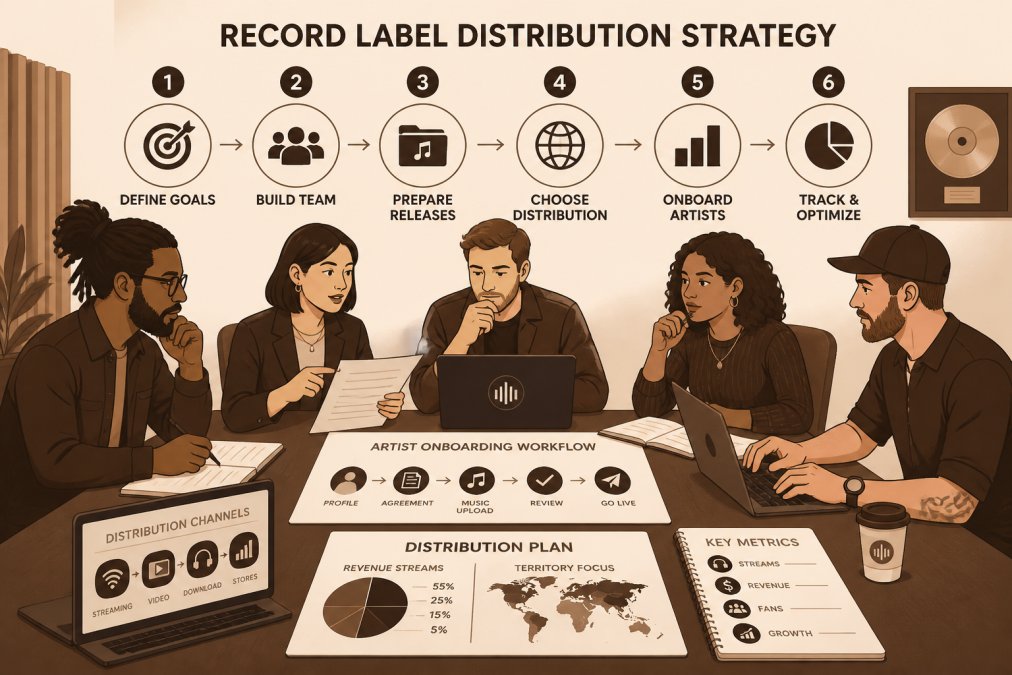
Define Your Release Schedule and Volume
How many releases will you put out monthly? How many artists are you signing? What's your growth projection for the next 12 months? This determines which platform's pricing model makes sense.
Identify Your Core Platforms
Electronic music labels need Beatport and Traxsource. Hip-hop labels need SoundCloud and YouTube. Indie pop labels need Spotify and Apple Music playlists. Choose a distributor with strong relationships where your audience discovers music.
Set Up Sublabel Architecture
Before onboarding your first artist, design your sublabel structure. Will you run everything under one brand, or build multiple imprints? Each needs its own identity, branding, and potentially its own financial tracking.
Establish Royalty Split Standards
Create a clear policy for how you split revenue with artists. Write this down. Your distributor should enforce these splits automatically.
Plan Your Metadata and Catalog Organization
Metadata determines how your music gets discovered. Create templates for your artists so submissions are consistent.
Build Artist Onboarding Process
Create a simple onboarding document explaining your release timeline, metadata requirements, royalty splits, and payout schedule.
Monitor and Iterate
Track what's working. Which platforms drive the most streams? Which artists' releases perform best? Use this data to refine your strategy.
Migration and Data Protection: Exit Strategy Considerations
Before committing to a distribution platform, understand what happens if you need to leave.
Data Portability
Can you export your catalog data, release history, and financial records? You want a distributor that will give you complete data exports without friction, including metadata, ISRCs, UPCs, release dates, and complete earnings history.
Catalog Takedown Process
When you leave, how long does it take to remove your music from streaming platforms? Clarify the takedown timeline before you commit.
Financial Settlements
What happens to money owed when you leave? Some platforms pay out immediately. Others hold funds for 30-90 days. Get this in writing.
Artist Data and Relationships
Your artists' contact information, earnings history, and performance data belong to them, not your distributor. Make sure you can export this information and maintain relationships with your artists if you switch platforms.
Contract Terms
Read the fine print on exit clauses. Some platforms charge penalties for early termination or have post-cancellation commission clauses. The best protection is choosing a distributor transparent about these issues from the start.
Choosing a DistroKid alternative for record labels means prioritizing the operational features that actually matter to label management: unlimited sublabels, monthly payouts, detailed reporting, and direct access to platforms where your audience discovers music. NexaTunes delivers on these fundamentals with transparent pricing and infrastructure built specifically for professional labels. If you're managing multiple artists and sublabels, you need a partner that treats label operations as a first-class use case, not an afterthought. Explore NexaTunes to see how monthly royalty payouts and detailed label-level reporting can simplify your operations and give you the financial visibility your label needs to scale.
Frequently Asked Questions
What makes DistroKid alternatives better for record labels than general music distribution platforms?
DistroKid was designed primarily for individual artists, not labels managing multiple sublabels and artists. True DistroKid alternatives for record labels offer label-level dashboards, automated royalty splits between sublabels and artists, bulk metadata management, and detailed reporting by artist and platform. These features let labels operate at scale without manually processing hundreds of individual releases or royalty calculations.
How do music distribution royalty splits work between labels and artists?
Music distribution royalty splits automate payments to collaborators and artists under a label. When a song earns royalties from streaming platforms, the distributor splits the payment according to predefined percentages you set. For example, if an artist retains 85% and the label takes 15%, the system automatically calculates and deposits each party's share. Advanced platforms track splits by release, artist, and sublabel, providing transparent accounting that protects both parties.
Is white label music distribution a good option for independent record labels?
White label music distribution allows labels to operate under their own brand while using another platform's infrastructure. This works well for labels wanting to scale quickly without building their own backend technology. However, evaluate whether the white label provider offers the label-specific tools you need, such as multi-artist management, custom reporting, and direct access to premium platforms like Beatport and Traxsource. Some white label solutions lack the transparency and control labels require.
What should I consider when planning how to start a record label distribution strategy?
Start by defining your catalog size, artist count, and target platforms (streaming, DJ platforms, social). Choose a distributor offering unlimited sublabels and artists if you plan to grow. Verify they provide monthly payouts, detailed label-level reporting by platform and artist, and bulk upload capabilities. Test their dashboard and customer support before committing. Confirm they handle metadata management (ISRC, UPC codes) and offer tools for playlist pitching or content ID monetization if those matter to your strategy.
What happens to my music and data if a distribution platform shuts down or gets acquired?
This is a critical exit strategy question. Before signing with any distributor, confirm they have a clear data portability and catalog migration policy. Ask whether you can export your metadata, release history, and earnings reports. Verify the platform's financial stability and whether they're backed by major investors or industry players. Some platforms guarantee you can pull your entire catalog within a specified timeframe if you leave. Always read the terms of service regarding what happens to your music, royalties, and data in acquisition scenarios.
Editorial Transparency: This article was created with the assistance of GrandRanker AI and reviewed, edited, fact-checked, and approved by the NexaTunes editorial team before publication.
“If you’re looking for a reliable way to distribute your music to Major Platforms , NexaTunes offers direct distribution with transparent terms.