
Music Streaming Services: A 2026 Guide to Quality, Cost & Features
Table of Contents
- Best Music Streaming Services of 2026
- Quick Comparison Table: Features at a Glance
- Understanding Hi-Res Audio Streaming Services
- Free vs. Premium Subscription Tiers
- Music Streaming Subscription Costs and Long-Term Value
- How to Switch Music Streaming Services Without Losing Your Library
- Key Features That Matter: Offline Listening, Discovery, and Platform Compatibility
- Which Music Streaming Service Should You Choose?
Last Updated: July 15, 2026
When choosing music streaming services, the sheer number of platforms available can feel overwhelming. Each claims superiority in different areas, audio quality, discovery algorithms, or smart home integration. We've analyzed how these platforms actually perform for different listener types. Below, we'll walk you through the leading services of 2026, break down what separates them, and help you determine which matches your actual needs.
Best Music Streaming Services of 2026
The music streaming landscape has matured significantly. Catalog size and basic playback are now table stakes. Today's competition centers on audio quality, discovery algorithms, ecosystem integration, and pricing. Let's examine the platforms that matter most.
Spotify: Discovery and Cross-Platform Excellence
Spotify remains the industry standard for music discovery. Its recommendation engine has been refined across billions of listening sessions. "Discover Weekly" playlists feel personal because they are, the algorithm learns your taste with remarkable precision. For users who value discovering new music, Spotify has no real competitor.
Spotify's cross-platform compatibility is seamless. You can start a song on your phone, switch to a web player mid-commute, and pick up on a smart speaker without friction. The free tier, despite ad interruptions and limited controls, remains genuinely useful for casual listeners exploring the service before committing.
Spotify Premium runs at $11.99 per month, with family plan pricing that scales reasonably for multiple listeners. Offline downloading works reliably, and podcast integration means you can consume both music and spoken content in one app. However, Spotify's audio quality caps at 320 kbps, solid for casual listening, but it falls short if you care about high-fidelity sound.
Apple Music: Lossless Audio and Spatial Sound
Apple Music is the choice for people deeply embedded in the Apple ecosystem who also care about audio quality. The service offers lossless audio up to 24-bit/192 kHz, meaning you hear recordings closer to how they were mastered. Spatial Audio with Dolby Atmos adds dimension to compatible tracks, positioning instruments in three-dimensional space.
The catch is hardware dependency. Lossless audio requires compatible Apple devices (newer iPhones, iPads, Macs, and Apple TV models). Spatial Audio similarly requires specific Apple hardware. This creates a tiered experience where premium features only unlock with the right equipment.
Apple Music's interface integrates tightly with Siri, Apple Watch, and HomePod speakers. The service includes Apple Music Classical, a dedicated app for classical music with proper tagging for movements, composers, and conductors. Pricing sits at $10.99 per month for individuals, with family plans available. There's no free tier, eliminating the "try before buying" option that Spotify offers.
TIDAL: Professional-Grade Hi-Res Audio
TIDAL serves two audiences: audiophiles demanding the highest audio fidelity, and professional DJs needing direct integration with production software. The platform offers HiRes FLAC audio, preserving full studio-quality sound without compression. For listeners with high-end audio equipment, the difference is audible, instruments separate cleanly, dynamics feel natural, and background details emerge.
The DJ angle sets TIDAL apart functionally. It integrates directly with professional software like Serato, rekordbox, and djay Pro, allowing DJs to stream tracks at full resolution and access stem separation technology. This workflow integration doesn't exist on other consumer streaming platforms.
TIDAL's starting price is $11.99 per month, positioning it at parity with Spotify Premium despite offering higher audio quality. However, the user interface feels less polished than Spotify's, and the discovery algorithm doesn't match Spotify's sophistication.
Amazon Music Unlimited: Smart Home Integration
Amazon Music Unlimited targets Prime members and people invested in Alexa. The service offers over 100 million songs in HD and Ultra HD (FLAC) quality, competing directly with Apple Music on audio fidelity. Voice control through Alexa speakers provides hands-free playback, start music by speaking, adjust volume, skip tracks, and queue songs without touching your phone.
For households with multiple Echo devices, this integration simplifies the listening experience. Music flows between rooms naturally. Alexa understands context ("play jazz for cooking") better than most voice assistants.
Pricing is competitive at $9.99 per month, or significantly cheaper if you're already paying for Amazon Prime. Prime members get access to a limited catalog (about 2 million songs) at no additional cost. The user interface lags behind Spotify's in intuitiveness, and music discovery features feel underdeveloped.
The real advantage emerges for smart home users. If your home runs on Alexa devices, Amazon Music Unlimited becomes the path of least resistance.
Quick Comparison Table: Features at a Glance
| Service | Starting Price | Audio Quality | Discovery | Smart Home | Best For |
|---|---|---|---|---|---|
| Spotify | $11.99/mo | 320 kbps | Excellent | Good | Music discovery, cross-platform |
| Apple Music | $10.99/mo | Lossless 24-bit | Very good | Excellent | Apple ecosystem users, audiophiles |
| TIDAL | $11.99/mo | HiRes FLAC | Good | Fair | DJs, audiophiles, artist-focused |
| Amazon Music Unlimited | $9.99/mo | Ultra HD FLAC | Fair | Excellent | Prime members, Alexa users |
Understanding Hi-Res Audio Streaming Services
The phrase "high-fidelity audio" gets thrown around loosely in marketing. Understanding what it actually means helps you decide whether paying for it makes sense.
What is High-Fidelity Audio?
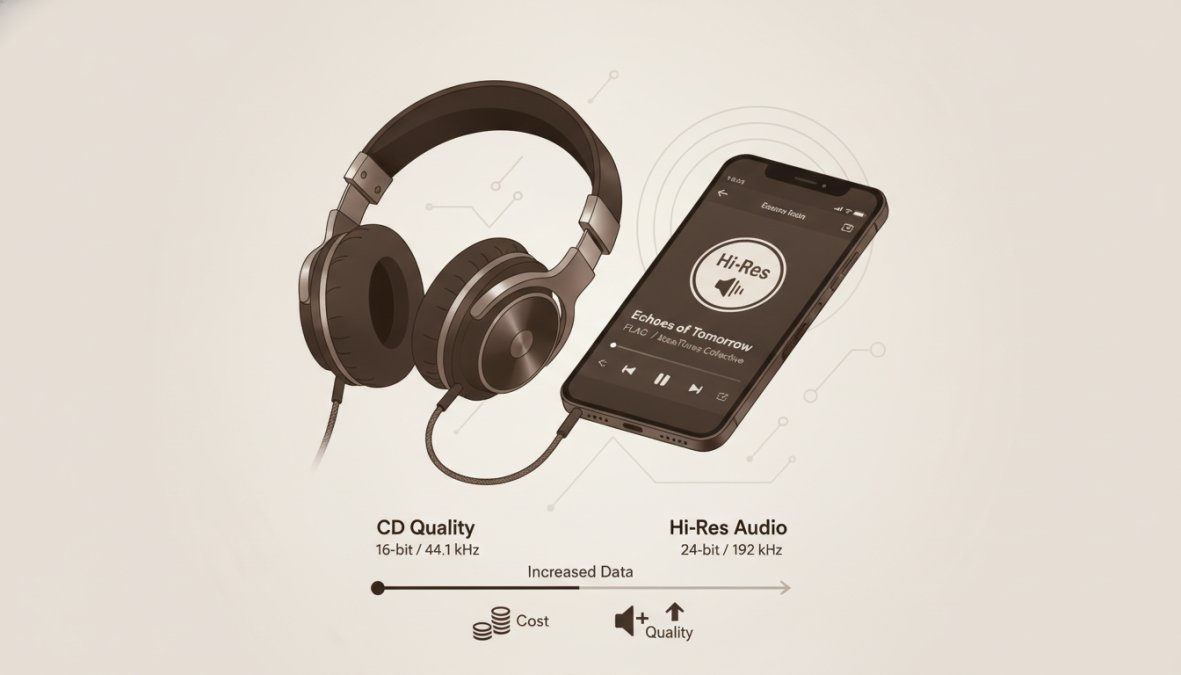
High-fidelity audio captures the full frequency range and dynamic detail of a recording without significant compression or quality loss. Most casual listeners hear music compressed to 128-256 kbps through services like Spotify's standard tier. Lossless audio (like Apple Music's 24-bit/192 kHz streams) preserves all original recording data. HiRes FLAC (like TIDAL's offering) goes further, storing additional resolution beyond CD-quality audio.
The audible difference depends entirely on your hardware. Cheap Bluetooth earbuds won't reveal the quality difference between 320 kbps and lossless. High-end headphones or a dedicated audio system will.
FLAC, Dolby Atmos, and Spatial Audio Explained
FLAC (Free Lossless Audio Codec) is a file format that compresses audio without losing any data. FLAC files are larger than MP3s but smaller than uncompressed audio. TIDAL streams in FLAC format at various quality tiers, with HiRes FLAC at the top.
Dolby Atmos is an immersive audio format that adds height channels to traditional surround sound, creating a three-dimensional soundscape where instruments feel positioned in space.
Spatial Audio is Apple's implementation of immersive sound through headphones. It uses head tracking to maintain the illusion of sound coming from fixed points in space as you move your head.
All three require compatible hardware. Not all tracks support these formats. If you're listening on standard headphones, you won't access these features.
Free vs. Premium Subscription Tiers
Spotify's free tier gives you access to the full music library but includes audio ads every few songs. Playback controls are limited, you can't skip backward, and you can't select specific tracks on mobile. Many people use the free tier as an extended trial before upgrading to Premium.
Apple Music and TIDAL don't offer free tiers. Amazon Music Unlimited offers a limited free tier (2 million songs) for Prime members, or the full Unlimited tier at $9.99 per month.
The decision between free and premium depends on listening intensity. Casual listeners might never need premium. Regular listeners who want specific track selection and better sound quality upgrade quickly.
Music Streaming Subscription Costs and Long-Term Value
Monthly vs. Annual Pricing Models
Most services charge month-to-month at around $10-12 per month. Some offer annual plans at modest discounts. The real pricing decision isn't monthly vs. annual, it's whether to subscribe to one service or multiple. Many people maintain subscriptions to two platforms: Spotify for discovery, plus either Apple Music or TIDAL for audio quality. This dual-subscription approach costs roughly $22-24 monthly.
Family Plans and Student Discounts
Family plans change the economics significantly. Spotify Family allows up to six accounts for $16.99 per month, roughly $2.83 per person for a household of six. Apple Music Family costs $16.99 for up to six people. These family options make premium streaming surprisingly affordable for multi-person households.
Student discounts further reduce costs. Spotify and Apple Music offer reduced rates when verified through educational partnerships.
Cost-of-Ownership Analysis Over 12 Months
A single premium subscription runs $120-144 annually. A family plan spreads to roughly $17-20 per person per year in a six-person household. Add a second service for audio quality, and you're at $240-288 annually for one person.
The long-term value depends on usage. Heavy listeners justify premium subscriptions easily. Casual listeners might find free tiers or limited subscriptions sufficient.
How to Switch Music Streaming Services Without Losing Your Library
Switching services means abandoning your playlists and saved songs unless you migrate properly. Third-party tools like Soundiiz, TuneMyMusic, and Playlisty automate the migration process. You connect your old streaming account, select playlists or your entire library, and the tool recreates everything on your new service.
These migration services are free or low-cost (under $5 for one-time transfers). They've become reliable enough that switching services no longer means starting from scratch.
The harder loss is algorithmic recommendations. When you switch services, your new platform has no listening history. It takes weeks or months of listening for algorithms to rebuild personalized recommendations. Some people maintain subscriptions to multiple services during transitions to keep using their old platform's recommendations while building history on the new one.
Key Features That Matter: Offline Listening, Discovery, and Platform Compatibility
Offline Download Capabilities
Offline downloading lets you store music locally on your device for playback without internet connection. This matters for travelers, commuters in areas with poor connectivity, and people who want to reduce data usage. Spotify Premium, Apple Music, TIDAL, and Amazon Music Unlimited all support offline downloads.
The practical difference emerges with storage constraints. A smartphone with 128GB storage can hold hundreds of songs offline comfortably. A device with 32GB fills up quickly.
Curated Playlists and Discovery Algorithms
Spotify's algorithm learns your taste through listening history and generates personalized recommendations. Apple Music's human curators build genre-specific and mood-specific playlists alongside algorithmic suggestions. TIDAL's discovery feels less sophisticated but includes artist-curated playlists.
Most people use both. They rely on algorithmic recommendations for daily listening and explore curated playlists when they want to discover music outside their usual taste.
Cross-Platform Support: iOS, Android, Desktop, and Smart Speakers
Spotify works identically on iPhone, Android, Mac, Windows, web browsers, smart speakers, gaming consoles, and car infotainment systems. This universal compatibility is Spotify's greatest strength operationally.
Apple Music works best on Apple devices but also supports Android and web browsers. TIDAL supports all major platforms but feels most polished on Apple devices. Amazon Music Unlimited works across all platforms and integrates deeply with Alexa speakers.
If you use multiple device types, Spotify or Amazon Music provide the smoothest experience. If you're all-in on Apple devices, Apple Music integrates more tightly.
Which Music Streaming Service Should You Choose?
The right service depends on what you actually prioritize.
For Audiophiles and Hi-Res Listeners
If you own quality headphones or a dedicated audio system, TIDAL or Apple Music are the only reasonable choices. TIDAL offers HiRes FLAC at $11.99 per month, the highest audio fidelity available in consumer streaming. Apple Music provides lossless audio at $10.99 per month. Spotify's 320 kbps maximum simply doesn't compete at this level.
For Music Discovery Enthusiasts
Spotify's discovery algorithm remains unmatched. If finding new music is your primary goal, Spotify is the default choice. The platform's "Discover Weekly" playlists, "Release Radar," and algorithmic radio stations consistently introduce listeners to artists they'll love.
This advantage compounds over time. The longer you use Spotify, the better its recommendations become.
For Budget-Conscious Users
Amazon Music Unlimited at $9.99 per month is the cheapest premium option. For Prime members, the value improves further. Family plans reduce per-person costs substantially.
If budget is your primary constraint, Amazon Music Unlimited provides the best value. The tradeoff is discovery quality and interface polish.
For Professional DJs and Music Producers
TIDAL is the only streaming service built for professional music production workflows. Direct integration with Serato, rekordbox, and djay Pro means you can stream full-resolution tracks within your DJ software. Stem separation technology lets you isolate vocals, drums, and other elements for remixing.
Choosing a music streaming service means accepting tradeoffs. Spotify excels at discovery but caps audio quality. Apple Music and TIDAL offer superior sound with different strengths. Amazon Music Unlimited provides the best value for budget-conscious listeners and Prime members.
Most services offer trial periods or low-cost entry points. Test the service before committing to a full year. Your actual usage patterns will reveal which platform truly fits your life.
Frequently Asked Questions
Which music streaming service has the best sound quality?
TIDAL and Apple Music lead in audio fidelity. TIDAL offers HiRes FLAC and Dolby Atmos audio, ideal for audiophiles with high-end equipment. Apple Music provides lossless audio up to 24-bit/192 kHz and spatial audio with Dolby Atmos. Amazon Music Unlimited also supports Ultra HD (FLAC) quality. Your choice depends on device compatibility and whether you prioritize hi-res audio streaming services.
Can I transfer my playlists when switching music streaming services?
Yes, several third-party tools enable cross-platform library migration. Services like Soundiiz and Playlist.com allow you to export playlists from one platform and import them to another. Most music streaming services also support manual playlist export via their web players. However, some curated playlists and algorithmic recommendations won't transfer, so you may need to rebuild personalized content on your new platform.
Is a premium music streaming subscription worth the cost?
Premium subscriptions eliminate ads, enable offline listening, and unlock higher audio quality, making them valuable if you listen regularly. Music streaming subscription costs range widely; family plans offer better per-person value than individual accounts. If you listen daily and value uninterrupted playback and offline access, premium typically justifies the expense. Free tiers work well for casual listeners willing to tolerate ads.
What's the difference between lossless audio and hi-res audio?
Lossless audio (like FLAC and AAC) preserves all original recording data without compression, offering studio-quality sound. Hi-res audio goes further, supporting higher bitrates and sampling rates (up to 24-bit/192 kHz), delivering even more detail. Not all listeners can perceive the difference without high-end equipment. When comparing hi-res audio streaming services, check whether your device supports these codecs to fully benefit from the enhanced quality.
Editorial Transparency: This article was created with the assistance of GrandRanker AI and reviewed, edited, fact-checked, and approved by the NexaTunes editorial team before publication.
“If you’re looking for a reliable way to distribute your music to Major Platforms , NexaTunes offers direct distribution with transparent terms.