
7 Best Music Distribution Platforms for Independent Labels 2026

Table of Contents
- What Makes a Music Distribution Platform Right for Independent Labels
- Quick Comparison: 7 Best Music Distribution Platforms for Independent Labels
- 1. NexaTunes: Label-Focused Distribution with Monthly Payouts
- 2. Symphonic Distribution: Professional-Grade Support and Sync Licensing
- 3. The Orchard: Enterprise Infrastructure for Growing Labels
- 4. FUGA: White-Label Solutions for Premium Label Operations
- 5. TuneCore: Flexible Subscription Plans for Multi-Artist Rosters
- 6. Identity Music: High-Touch Support with Publishing Administration
7 Best Music Distribution Platforms for Independent Labels
Last Updated: July 11, 2026
What Makes a Music Distribution Platform Right for Independent Labels
Independent record labels need distribution partners that address enterprise-level operations: managing multiple artists, handling sublabel structures, coordinating royalty splits, and scaling infrastructure. Labels prioritize transparent royalty reporting, scalable systems for unlimited artists, and direct access to premium DSPs like Beatport and Traxsource.
The right platform becomes your label's backbone, handling metadata management, ISRC code generation, and DSP delivery so your team focuses on A&R and artist development.
Key Features to Evaluate
Royalty Reporting and Payment Structure. How quickly do you receive payouts? Do they break down earnings by artist, release, territory, and DSP? Real-time visibility into earnings matters more than absolute payout percentages.
Scalability for Multiple Artists. Does the platform charge per artist or offer unlimited rosters? Can you create sublabels with separate accounting? Pricing models that work at scale become critical as your label grows.
DSP Access and Pitching Support. Direct relationships with Spotify curators, Apple Music editors, or Beatport buyers can mean the difference between playlist placement and obscurity.
Publishing Administration. Does the distributor integrate mechanical licensing, songwriter splits, and publishing collection, or do you manage that separately?
Metadata Management and Delivery Speed. How long between uploading and tracks appearing on stores? Can you batch upload multiple releases?
Quick Comparison: 7 Best Music Distribution Platforms for Independent Labels
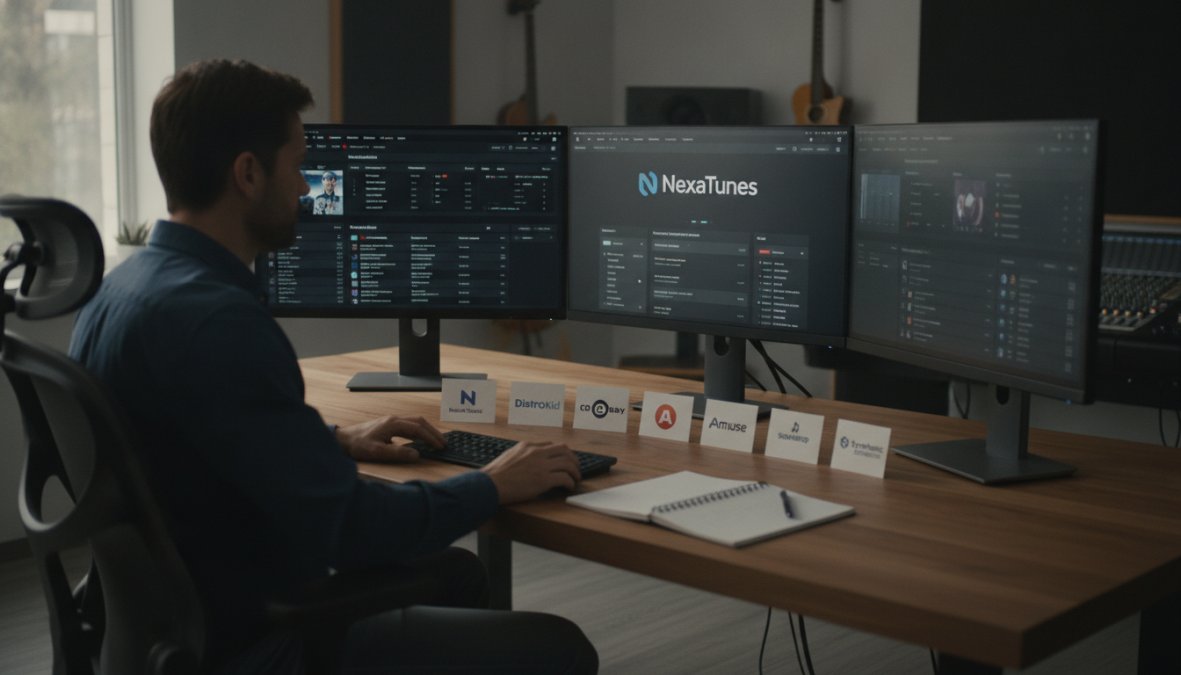
| Platform | Best For | Key Strength | Pricing Model |
|---|---|---|---|
| NexaTunes | Label-focused operations | Monthly payouts, unlimited sublabels | Contact for pricing |
| Symphonic Distribution | Professional-grade support | SplitShare royalty automation, editorial pitching | Custom/commission |
| The Orchard | Enterprise-scale labels | Global physical + digital distribution | Custom/commission |
| FUGA | Premium technical infrastructure | White-label portal, Dolby Atmos support | Custom B2B |
| TuneCore | Budget-conscious multi-artist rosters | Publishing administration, tiered plans | $24.99/year starter |
| Identity Music | High-touch service seekers | Personalized support, music promotion included | Contact for pricing |
| Ditto Music | Independent labels with retail needs | Physical distribution, vinyl support | Contact for pricing |
1. NexaTunes: Label-Focused Distribution with Monthly Payouts
NexaTunes was built specifically for independent record labels. The platform delivers monthly royalty payouts rather than quarterly or bi-annual cycles, maintaining better cash flow during growth phases.
Unlimited sublabels with separate accounting let you create distinct operations for each artist collective, genre imprint, or regional operation without paying extra per sublabel. Detailed label-level reporting tracks revenue by artist, release, territory, and DSP in real time. Export custom reports for accounting, artist statements, or investor presentations.
Direct access to Beatport and Traxsource differentiates NexaTunes for electronic music, dance, and urban labels. Rather than hoping releases appear through standard DSP channels, you get direct submission pathways that accelerate playlist placement.
2. Symphonic Distribution: Professional-Grade Support and Sync Licensing
Symphonic combines distribution with publishing administration and sync licensing services, eliminating the need for separate vendors. The SplitShare feature automates royalty payments to collaborators based on percentages you set, reducing manual accounting work.
Direct editorial pitching support distinguishes Symphonic from platforms providing only upload infrastructure. The team pitches releases to Spotify curators, Apple Music editors, and other DSP decision-makers, giving labels better chances at playlist placement without separate PR agencies.
Advanced analytics track performance across platforms in real time, showing which DSPs drive most streams, which territories show strongest growth, and which releases underperform. Use these insights to guide A&R decisions and marketing spend.
Symphonic is selective and reviews applications, meaning better support for accepted labels but higher barriers to entry.
3. The Orchard: Enterprise Infrastructure for Growing Labels
The Orchard operates at enterprise scale, managing distribution for thousands of labels globally. The platform combines digital distribution with physical retail relationships, securing placement in streaming services, physical stores, vinyl pressing coordination, and international retail channels.
Comprehensive royalty accounting and rights management handle complex label structures, managing multiple imprints and tracking rights ownership across territories. Strategic support for catalog growth provides guidance on release timing, territory-specific marketing, and audience development.
The Orchard is highly selective and typically works with established labels that have demonstrated track records.
4. FUGA: White-Label Solutions for Premium Label Operations
FUGA serves B2B distribution, primarily other distributors and premium labels needing white-label infrastructure. The platform delivers to 260+ DSPs with support for high-definition audio and Dolby Atmos delivery.
White-label portal options let you build a custom distribution interface branded as your own service. Your artists interact with your label's branding, not FUGA's. Advanced rights administration and royalty processing handle publishing, mechanical licensing, and split payments across multiple territories.
FUGA is enterprise software for operations with sophisticated requirements and dedicated staff.
5. TuneCore: Flexible Subscription Plans for Multi-Artist Rosters
TuneCore's tiered subscription plans scale with your roster. Start with basic plans covering single artists, then upgrade to Professional plans supporting multiple primary artists and unlimited collaborators. This flexibility means paying for what you need without overpaying for unused enterprise features.
Strong publishing administration integration handles mechanical licensing, songwriter splits, and publishing collection across major territories. Daily trend reports and analytics give real-time visibility into performance, showing which releases gain traction, which territories show strongest interest, and how your catalog performs against trends.
Multi-artist pricing can become expensive for large rosters, as each additional primary artist costs extra.
6. Identity Music: High-Touch Support with Publishing Administration
Identity Music operates as an invite-only distributor, enabling personalized support that generic platforms can't match. Reach human team members quickly for strategic decisions about release timing, territory-specific approaches, and artist development.
Digital rights management and publishing administration are built into core services. Identity Music handles mechanical licensing, songwriter splits, and publishing collection, reducing administrative overhead. Music promotion services are included, with the team actively pitching releases to curators, playlist editors, and media outlets.
The invite-only model limits availability and excludes early-stage labels.
How to Choose the Right Music Distribution Platform for Your Label
For 1-10 artists: TuneCore's subscription model provides reliable infrastructure at predictable costs with publishing administration and analytics.
For 10-50 artists across multiple sublabels: NexaTunes addresses operational complexity with unlimited sublabel structure, transparent reporting, and monthly payouts without per-artist fees.
For 50+ artists generating significant revenue: The Orchard or FUGA offer enterprise infrastructure designed for scale with physical distribution and sophisticated rights management.
For personalized support and music promotion: Identity Music's high-touch approach justifies premium pricing for expertise, relationships, and active pitching.
For electronic music, dance, or Beatport-driven genres: NexaTunes's direct access to these platforms accelerates playlist placement compared to generic distributors.
Music Distribution Royalty Splits and Revenue Models
Commission-based models take 15-25% of revenue before paying the label. Symphonic, The Orchard, and Identity Music use this structure. You pay only when generating revenue, but commissions eat into margins at scale.
Subscription models charge flat monthly or annual fees regardless of revenue. TuneCore charges $24.99 annually for basic distribution. You pay predictable costs with no revenue sharing, but subscription becomes inefficient for low-volume labels.
At meaningful scale, subscription models outperform commission-based pricing. A label generating $100,000 annually loses $15,000-$25,000 to commission versus $300 annually for subscription.
NexaTunes operates on custom pricing where labels contact for quotes based on specific needs, artist count, and service requirements.
Post-Distribution Analytics: Tracking What Matters
Most platforms provide basic analytics: total streams, revenue by DSP, geographic performance. Label-level analytics go deeper, showing which releases gain momentum, which artists develop audiences, and which marketing efforts drive results.
NexaTunes provides label-level dashboards showing aggregated performance across your entire roster. Symphonic's analytics include territory-specific breakdowns revealing where to focus marketing spend and plan tours.
Track these metrics consistently:
- Streams per release in first 30 days
- Geographic distribution of streams
- DSP performance variance
- Revenue per stream by territory
- Audience growth month-over-month
Catalog Migration: Planning Your Exit Strategy
Migration timing matters. Never switch distributors mid-campaign. Complete your current release cycle, let it stabilize on streaming platforms (30-60 days), then plan the transition.
Backup your metadata. Export complete release information before leaving any platform: track titles, artist names, songwriter credits, producer information, artwork files, and custom descriptions.
Notify your artists. Let your roster know about the transition, why you're making it, and what changes they'll see. Reassure them that their music stays live throughout migration.
Stagger releases during transition. Release through your old distributor until transition completes, then resume through the new one. This maintains momentum and keeps your audience engaged.
Sync Licensing and Music Placement Opportunities
Beyond streaming distribution, independent labels generate revenue through sync licensing: placing music in films, television, advertising, and video games. Symphonic includes sync licensing as part of its service, connecting your catalog with music supervisors searching for specific sounds.
Identity Music's music promotion services include sync placement pitching. Other platforms like NexaTunes, TuneCore, and The Orchard focus primarily on streaming distribution and may offer sync licensing as add-on services.
A single television placement can generate $5,000-$50,000 depending on reach and licensing terms. Build sync licensing strategy into your distributor evaluation if your label creates music suitable for licensing.
Getting Started with Your Label's Distribution Strategy
Start with a test release. Upload one or two releases through your chosen platform, verify everything appears correctly on all DSPs, and confirm royalty reporting works as expected.
Set up sublabel structure if needed. Configure your label hierarchy before uploading releases if using platforms supporting sublabels.
Establish metadata standards. Create templates for artist names, track titles, and songwriter credits. Consistency prevents errors that delay releases or confuse audience discovery.
Schedule releases strategically. Stagger releases across weeks or months to maintain consistent visibility and audience engagement.
Monitor the first 60 days closely. Track performance daily, see which DSPs feature your release, and use insights to refine strategy for subsequent releases.
Key Takeaways: Choosing Your Label's Distribution Partner
For label-focused operations: NexaTunes provides transparent reporting, monthly payouts, and unlimited sublabel structure designed specifically for labels.
For professional support and active pitching: Symphonic Distribution and Identity Music offer hands-on guidance, editorial relationships, and music promotion services.
For enterprise-scale operations: The Orchard and FUGA provide infrastructure for 50+ artists with physical distribution and sophisticated rights management.
For budget-conscious multi-artist rosters: TuneCore's subscription model provides predictable costs and strong publishing administration.
For genre-specific advantages: NexaTunes's direct access to Beatport and Traxsource benefits electronic music, dance, and urban labels.
The right platform removes obstacles from your label's path. Evaluate your current bottleneck and choose the platform that solves that problem first. You can migrate later as your label evolves.
Independent labels choosing distributors aligned with their operational structure see faster growth and better artist retention. Distribution becomes your label's financial backbone, monthly payouts affect cash flow, transparent reporting enables accurate accounting, and scalable infrastructure supports growth without restructuring.
Start by evaluating your current operational needs, then select the platform that removes your biggest friction point. One of these platforms is right for where your label is today.
Frequently Asked Questions
What is the best music distribution service for record labels?
The best music distribution platform for your independent label depends on your specific needs. NexaTunes excels for labels prioritizing transparent monthly royalty payouts and detailed label-level reporting. The Orchard and FUGA serve larger, enterprise-level labels needing global reach and advanced infrastructure. TuneCore works well for labels managing multiple artists on a budget. Consider your roster size, budget, and whether you need sync licensing support when evaluating options.
How do music distribution royalty splits work for independent labels?
Music distribution royalty splits determine how revenue from DSPs (Digital Service Providers) like Spotify and Apple Music is divided between the distributor and your label. Most platforms operate on a revenue share model, taking a percentage commission, while others charge upfront subscription fees. The best platforms offer transparent accounting with detailed breakdowns by artist, track, and territory. Look for distributors providing monthly or quarterly payouts with clear metadata management and ISRC code tracking to ensure accurate royalty attribution.
What features should I look for in a music distribution platform for multiple artists?
For managing multiple artists, prioritize platforms offering unlimited sublabel support, batch artist onboarding, and centralized royalty reporting. Key features include ISRC and UPC code generation, individual artist dashboards, territory-specific release controls, and pre-save campaign tools. Platforms like NexaTunes provide unlimited sublabels and comprehensive artist management, while TuneCore's Professional plan supports multiple primary artists. Ensure the platform scales with your roster growth without proportional cost increases.
Do independent labels need special music distribution platforms compared to individual artists?
Yes. Label-specific platforms offer features individual artists don't need: sublabel management, multi-artist royalty aggregation, label-level analytics dashboards, and direct access to premium DSPs like Beatport and Traxsource. They also provide better support for rights administration, publishing integration, and catalog management. Platforms like NexaTunes, The Orchard, and FUGA are designed specifically for label infrastructure, offering scalability and transparent financial reporting essential for label operations.
How can I migrate my catalog if I switch music distribution platforms?
Most quality distributors support catalog migration by transferring your ISRC codes, metadata, and release history to a new platform. Before switching, verify the new distributor accepts catalog imports and can maintain your release continuity on DSPs. Document all your release dates, UPC codes, and artist information. Some platforms like FUGA offer white-label flexibility for smoother transitions. Always plan migration during a low-release period and communicate with your artists about any temporary DSP unavailability.
Editorial Transparency: This article was created with the assistance of GrandRanker AI and reviewed, edited, fact-checked, and approved by the NexaTunes editorial team before publication.
“If you’re looking for a reliable way to distribute your music to Major Platforms , NexaTunes offers direct distribution with transparent terms.